


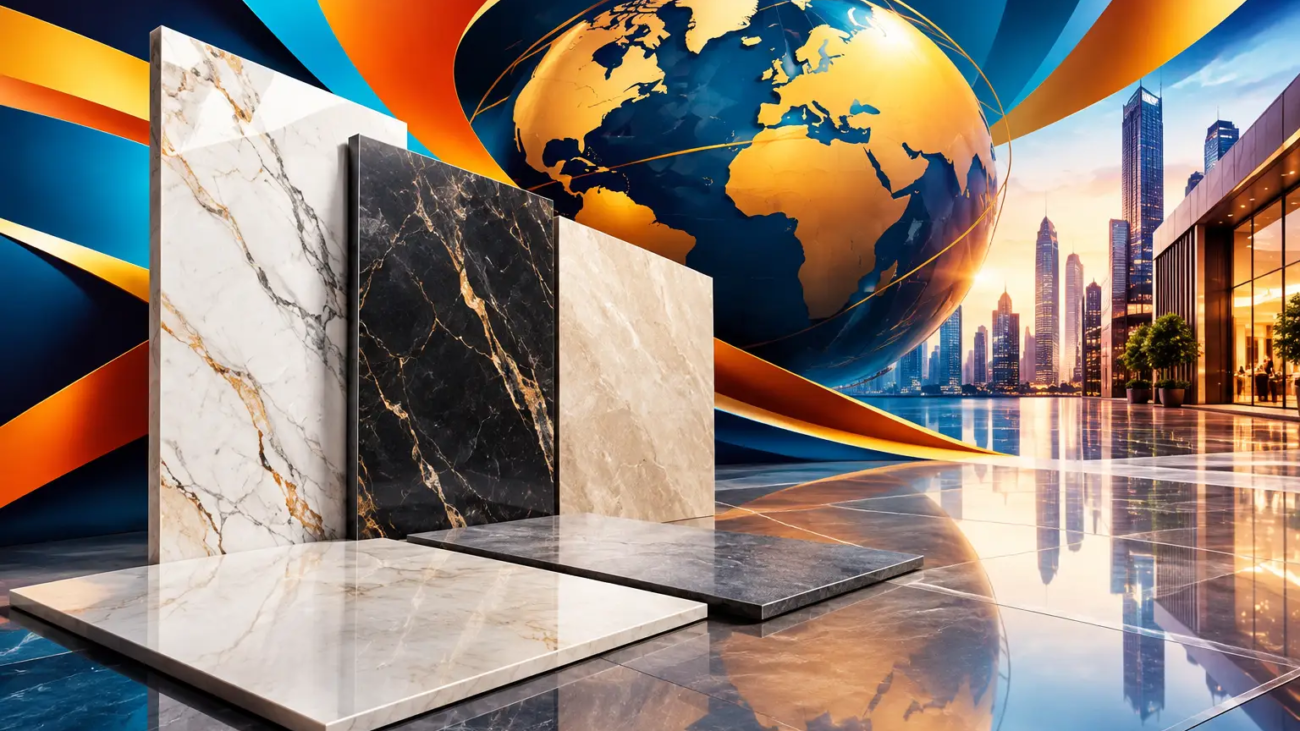
A lobby floor has to do more than look impressive on opening day. It must carry luggage wheels, cleaning equipment, high foot traffic, and years of visual scrutiny without losing the character envisioned by the design team. That is why selecting بلاط بورسلان ورخام is not simply a finish decision. For developers, hospitality buyers, architects, and contractors, it is a decision about performance, visual identity, budget control, installation coordination, and long-term asset value.
Porcelain and marble can both create premium interiors and architectural surfaces, but they solve different project challenges. The strongest procurement strategy does not treat one as a universal replacement for the other. It aligns each material with the space, operating conditions, design intent, and supply plan behind the project.
Why Porcelain and Marble Belong in the Same Conversation
Natural marble brings geological depth that cannot be mechanically repeated. Its veining, tonal shifts, and surface character give reception areas, luxury bathrooms, feature walls, and residential spaces a distinct sense of permanence. Each slab or tile has variation, and that variation is often the point. It allows a project to feel authored rather than standardized.
Porcelain offers a different kind of design freedom. Produced under controlled manufacturing conditions, it can reproduce stone, marble, concrete, wood, metal, and contemporary textures while offering consistent dimensions, reliable shade management, and strong technical performance. Large-format porcelain panels can also reduce visible grout lines, helping designers create expansive surfaces with a refined architectural rhythm.
The decision is not only visual. Marble is a natural stone that needs thoughtful sealing, maintenance planning, and protection from staining or etching in sensitive areas. Porcelain is generally less absorbent and easier to maintain, making it a practical choice for busy hotel corridors, retail environments, food-service spaces, exterior facades, and high-use bathrooms. Yet porcelain is not automatically the right answer everywhere. A signature marble arrival space may create emotional value that a marble-look alternative cannot fully duplicate.
Selecting بلاط بورسلان ورخام by Project Zone
A successful material schedule begins with the reality of each zone, not with a catalog image. For a hotel, the entrance, guest room bathroom, spa, restaurant, pool deck, and service corridor have different exposure levels and different expectations. For a mixed-use development, the same is true of public circulation, private residences, storefronts, terraces, and back-of-house areas.
High-traffic commercial interiors
For airports, retail centers, hotel lobbies, corporate facilities, and heavily used corridors, porcelain is frequently the operationally intelligent choice. Specify the required slip resistance, abrasion performance, tile thickness, edge finish, and size tolerance according to the installation method and local code requirements. A polished surface may support a luxury visual concept, but a honed, satin, or structured finish may be safer and more appropriate where water or frequent cleaning is expected.
Large-format porcelain can elevate commercial interiors, but it also raises execution requirements. Substrate flatness, adhesive selection, movement joints, handling equipment, and installer capability must be confirmed early. A low material price loses its advantage if breakage, delays, or poor alignment appear during installation.
Luxury focal areas
Marble remains highly effective in spaces where material authenticity is central to the experience: executive reception desks, boutique hotel bathrooms, fireplace surrounds, private villas, premium retail displays, and feature walls. Here, the natural variation should be treated as a design asset, not a procurement defect.
The key is to approve the stone correctly. A small sample cannot represent a full marble production run. Buyers should review larger sample boards, establish accepted range expectations for color and veining, and determine whether book-matching, vein-cutting, cross-cutting, or a mixed layout is required. This avoids the common disconnect between the approved sample and the delivered material.
Wet areas and outdoor settings
Wet and exterior applications demand more than an attractive surface. Water absorption, slip resistance, frost exposure, drainage, substrate movement, and cleaning chemicals all influence the correct selection. Porcelain is often preferred for pool surrounds, terraces, showers, and outdoor hospitality areas because it can provide a controlled finish with low absorption.
Marble can be used in wet settings, but the specification must reflect its maintenance needs and the risk profile of the location. In some projects, marble is best reserved for vertical surfaces or protected dry zones while porcelain handles floors and exposed areas. This combination protects the visual concept while reducing operational risk.
The Cost Question Is Bigger Than Price per Square Foot
Comparing marble and porcelain only by unit cost creates misleading budgets. A credible comparison considers yield, cutting losses, shipping weight, packaging, breakage allowances, installation labor, waste factors, maintenance needs, replacement availability, and the cost of schedule disruption.
Marble may involve more selection, cutting, finishing, and site protection. Porcelain may offer more predictable coverage and maintenance, but oversized formats can require specialized logistics and installation. A 24-by-48-inch tile and a large porcelain panel do not create the same freight, handling, or labor conditions, even if their surface appearance is similar.
For international projects, packaging deserves particular attention. Tiles must arrive with appropriate crate or pallet protection, clear labeling, batch traceability, and loading plans that support efficient unloading at destination. Procurement is not complete when material leaves the factory. It is complete when the right quantities arrive in usable condition, at the right phase of construction.
Design Coordination Prevents Expensive Visual Compromises
The most effective tile programs are coordinated before final orders are released. This includes confirming module sizes, grout color and width, transitions between materials, wall-to-floor alignment, trims, stair details, drainage points, movement joints, and lighting conditions. A finish that looks elegant under showroom lighting may read differently beneath warm hotel lighting or strong daylight.
Mockups are especially valuable when combining marble and porcelain. They allow the project team to evaluate whether a porcelain marble-look floor supports the selected natural stone wall, whether the tones work together, and whether the scale of veining feels intentional. They also reveal practical issues, such as edge lippage, reflection, grout visibility, and changes in tone across production batches.
This is where a sourcing partner with design awareness adds measurable value. Rather than presenting products as isolated samples, the right team helps build a coherent surface language across the project. That can mean identifying matching porcelain collections, recommending suitable marble alternatives, coordinating fabrication details, and aligning factory production with approved design standards.
Factory-Direct Sourcing From Turkey Creates More Options
Turkey offers a powerful combination of porcelain manufacturing capability, natural stone resources, fabrication expertise, and export experience. For international buyers, factory-direct access can expand design options while improving visibility into production capacity, finish possibilities, and lead times.
However, direct sourcing should not mean unmanaged sourcing. The right procurement structure verifies technical data, confirms samples and production lots, checks packing standards, coordinates inspections, and plans shipping around the construction schedule. It also makes room for realistic lead times. Custom finishes, calibrated stone, large-format products, and book-matched programs require early decisions if they are to support the project timeline.
MaroufTurk approaches this process as a project supply strategy, connecting Turkish manufacturing access with material selection, design coordination, quality control, and international delivery. For buyers managing multiple stakeholders across borders, one coordinated channel can reduce the friction between design ambition and site-ready execution.
Choose for the Experience You Need to Deliver
Porcelain is often the stronger choice when consistency, durability, low maintenance, and high-volume coverage lead the brief. Marble is often the stronger choice when authenticity, natural movement, and premium material presence define the experience. Many of the most successful projects use both with purpose: porcelain for operational resilience and marble for moments that deserve to be remembered.
The productive question is not whether porcelain is better than marble, or the reverse. It is whether every surface is earning its place in the project – visually, technically, financially, and operationally. When materials are selected with that discipline, the finished space does more than meet specifications. It carries the original vision into years of real-world use.